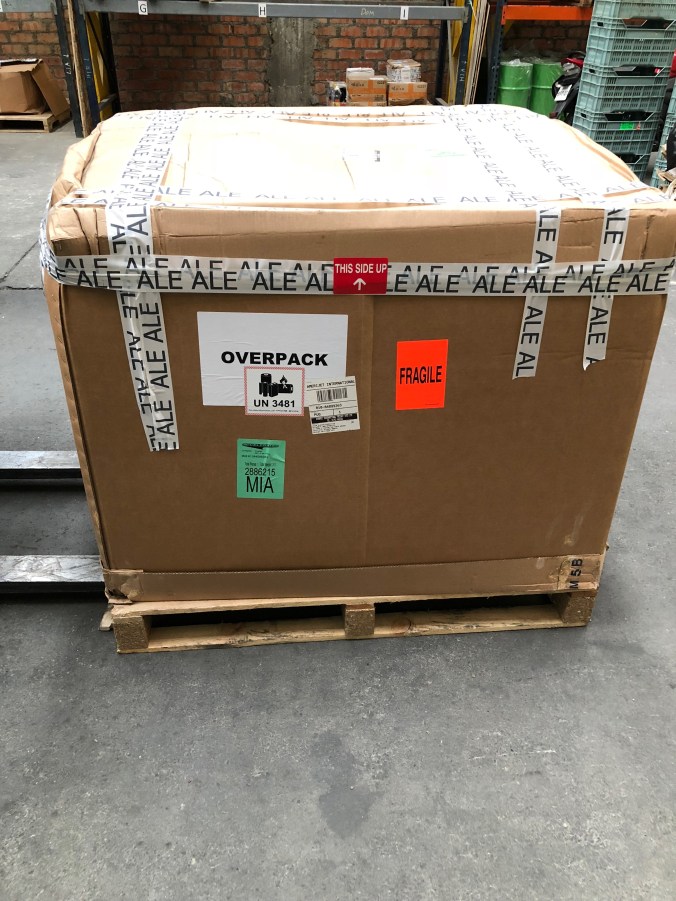
After a good nights sleep, I reported in to ALE offices in “Punta” to unpack all the equipment and to get all the batteries on charge. After a fascinating tour of the offices and seeing some of the inspirational images on the walls from all the expeditions that have been handled by ALE you realise that this place is central to so many of the explorers heading to Antartica and their success.
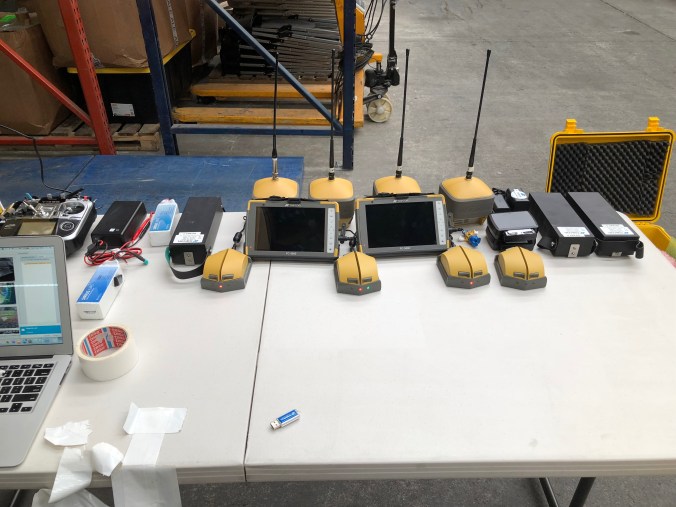 This was also an opportunity to set up the Sirius Pro UAV camera and ensure it was ready for Antartica. After such a long shipping time the camera’s internal batteries could have discharged and would need reconfiguration. However all was good and I proceeded to set up a flight plan around the ALE office and transmit this to the plane. There was no need to make any test flight as the system has a handy test feature to check it is working correctly. When rotating the plane >90 legs the camera activates. All good on the UAV side.
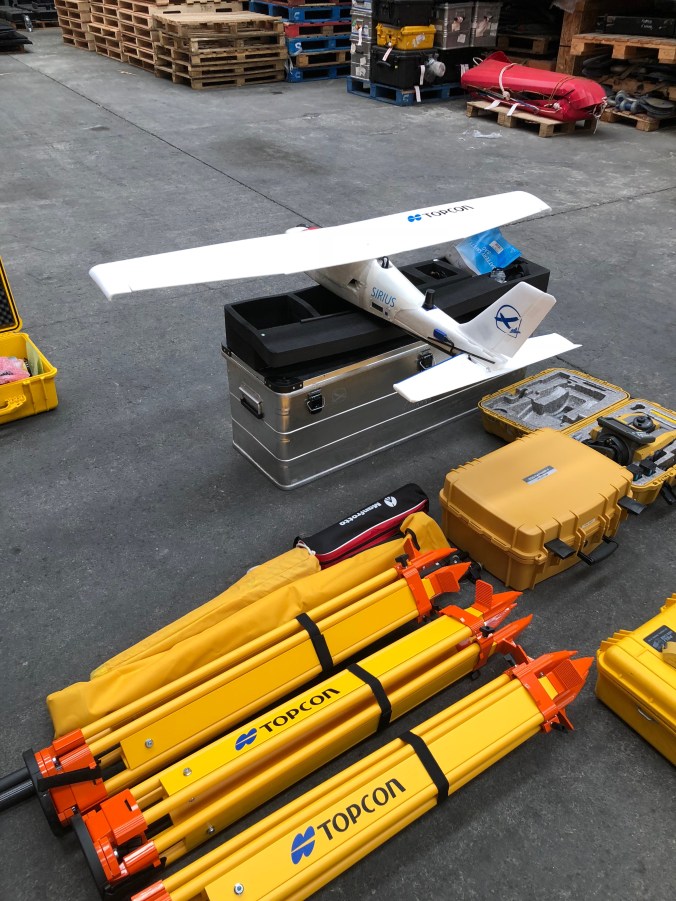
Now to check the Topcon GT robotic. This system is easy to configure and only took a few minutes to confirm all was well. On to the GNSS. I have decided to take Topcon HiPER HR’s for this trip. The advanced tracking and low temperature specification should mean they work well. They can also be configured to work in Base or Rover mode and have internal memory for days of Post Processing data if required. A few spare batteries and external batteries for each receiver should keep me working long hours in Antartica. I have also packed a few extra cables to allow connection to the skidoo batteries too, as a back up plan.
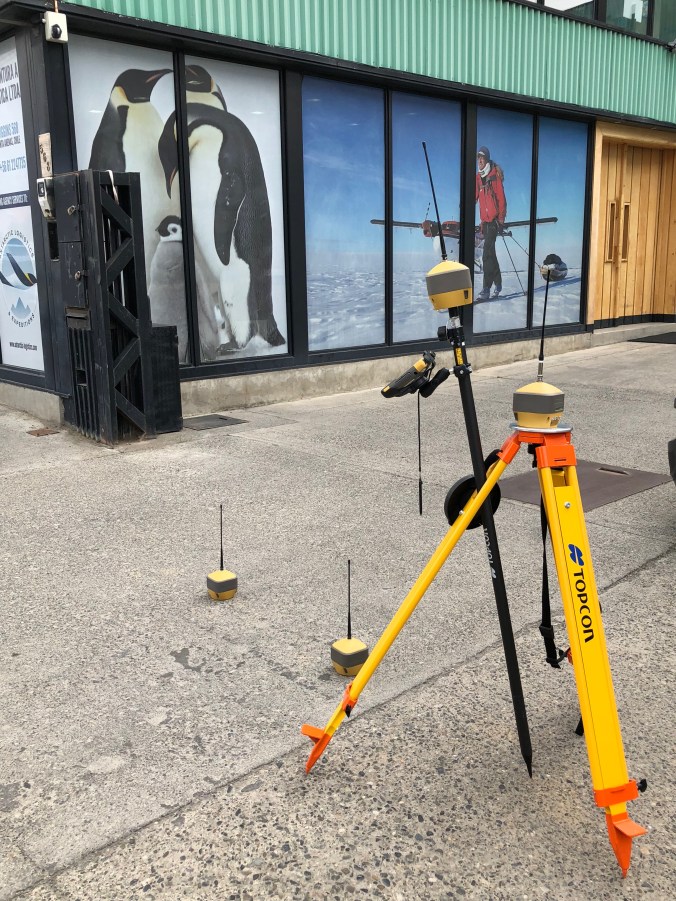
It was easy to get two of the receivers working, but two which were loaned from a different source wouldn’t play ball and fix. Investigation with TRUE software revealed a different radio setting on these two receivers for the FOC – “Forward Error Correction” was off ! Easily rectified when found, and all three rovers were giving fixed positions.
Ready to hand over to the flight freight loading team and then report for my “weather protection clothing” issuing.

 Topconlife